For VPs, CEOs and founders who lead sales managers

Promoted to lead.
Left to figure it out.

That's how your frontline sales manager probably got the job. Best seller on the team, handed people instead of deals, and no instructions for any of it.

So they manage. They react to the number, chase the pipeline, and jump into deals. Leading is a different job, and nobody taught it to them. The Sales Leader Trident does. Three months, one manager at a time. Over 500 so far.

500+
sales managers through the Trident
25
years leading and coaching sales teams
3
months, start to finish, built around the team your manager has now

Why good sales teams stall

Nobody ever taught your frontline sales manager how to lead.

Most frontline sales managers got the job because they were the best seller on the team. Nothing about that prepares a person to build a culture, coach an adult, or have a hard conversation that actually changes behavior. So they fall back on what they know, which is doing the deals themselves and reading the numbers out loud once a week.

And they won't ask for help. Sales managers almost never raise their hand, and the few who do still have to come back and sell you on paying for it. If your manager's going to get better, it starts with you.

Managing versus leading

Signs your frontline manager needs the right information.

Management is monitoring, measuring, and reporting. Leadership is helping people get somewhere they couldn't get on their own. Your team needs both, but most frontline sales managers were only ever shown the first one, so they spend the week reacting to whatever lands on their desk.

A manager who's managingA manager who's leading

ManagingReacts to the number at the end of the month.

LeadingSets the standard at the start of the month and coaches to it every week.

ManagingJumps in and closes the deal.

LeadingBuilds a rep who can close it without them.

ManagingRuns one on ones as pipeline interrogations.

LeadingRuns one on ones that change what the rep does next.

ManagingCoaches everyone the same way.

LeadingKnows whether a rep can't do it or won't, and coaches each one differently.

ManagingPuts out fires.

LeadingFixes whatever keeps starting them.

ManagingHires when someone quits, on gut feel.

LeadingHires to a written profile, before there's a gap.

ManagingKeeps the rep everyone knows isn't going to make it.

LeadingDeals with it in weeks, not quarters.

ManagingBrings you the problem.

LeadingBrings you the problem and the plan.

The size of the gap

This isn't just your company. It's an everybody problem.

9%

of a frontline sales manager's time goes to developing their sellers.

76%

of sales managers get zero training or preparation for the role.

38%

of sellers say their manager helps them build the skills the job needs today.

26%

performance lift from an equipped manager, and triple the odds of a high performer.

Source: Gallup research on frontline sales management.

Free scorecard for your manager

Find out where your frontline sales manager stands.

Have your manager take the free Sales Leader Scorecard. Thirty questions across the ten areas every sales leader is responsible for. In about 12 minutes they'll see their total out of 150, every area ranked, and the three to work on first.

Then ask them to bring their results to your next one on one. It's the easiest way to start the conversation about where they're leading and where they're just managing.

Email It to Your Manager

No cost. Their results are theirs to print or save as a PDF. Want to see it first? Preview the scorecard.

The method

Stop managing. Start leading.

The Trident equips your frontline manager to lead, not just manage. Three prongs, because they're the three things a sales leader is actually responsible for.

Not theory, not a book report. Frameworks your frontline sales manager uses on Monday morning with the team they already have.

PRONG 01

Build and protect your sales culture

Culture gets built on purpose or by accident, and accidental cultures don't produce consistent performance. We build yours deliberately, then defend it at the three moments it's most at risk: when your manager coaches the team, when they hire someone new, and when they keep someone too long.

  • The Intentional Culture Formula
  • Vision, mission, values, and the accountability map
  • Systems of accountability people opt into
  • Hiring the Ultimate Salesperson: knowledge, skills, attributes
  • The five step interview, including the coachability test
  • Firing right, and the four questions to ask first
PRONG 02

Coaching to proficiency, not just good enough

Quota is where it starts, not where it stops. Coaching gets someone proficient at the job they have. Development gets them ready for the next one. Most managers do neither, because nobody showed them the difference or gave them a structure for the conversation.

  • The four part one on one: person, performance, pipeline, plan
  • The two reasons people don't perform, and how to tell them apart
  • The three times to coach: good, poor, and problem performance
  • The PACE model for the conversation itself
  • Standard versus style, and the needle mover test
  • Pipeline leadership: coverage, conversion, cycle, cash
  • CAN goals, and why SMART goals break for salespeople
PRONG 03

Communicating to connect with the team

Everything above runs through trust. Where trust is thin, a coaching conversation lands as a lecture and your team fills every information gap with the worst story they can imagine. This prong clears the road.

  • The Three Levels of Communication
  • The Communication Filter: how each person's experiences color communication
  • The Big Five weekly sales meeting
  • Emotional intelligence: self awareness and a leader's hot buttons
  • Reaction versus response
  • Difficult conversations without the resentment
  • The SALE model for resolving conflict and handling difficult conversations

What changes

Three months from now.

Your manager can name what motivates every person who reports to them.
A one on one is a triage event that sets priorities, not a status update.
Underperformance gets handled in weeks, not quarters, and nobody's surprised.
Your manager hires against a written profile instead of a feeling in the room.
The team knows the standard, because it's written down and coached to.
The pipeline conversation is about coverage and conversion, not optimism.
Good behavior gets caught and named, so it gets repeated.
Performance stops being a rollercoaster and starts being a trend.

The program

The Sales Leader Trident

Three months of live coaching for your frontline sales manager, one manager at a time, built around the team they're leading right now. Every session ends with homework and a date. Every session starts by checking whether the last one got done.

We don't run a curriculum at your manager. We start with foundations, then follow the arc, and when a real situation lands on their desk that week, that situation becomes the session. A rep who went quiet, a hire they're unsure about, a conversation they've been avoiding for a month. That's the material.

Where the engagement includes the wider team, the leader's sessions run alongside team training on the same cadence, so the manager is coaching to a standard the team has actually been taught.

Duration3 months
FormatLive coaching, weekly
Session length45 minutes
DeliveryZoom, or on site
Built forFrontline sales managers
InvestmentPriced per manager

Other ways to work together

Got a specific problem? There's a specific fix.

Maybe you need a sales leader in the seat tomorrow. Maybe your manager is mostly there and just needs their coaching sharpened. Maybe it's the sellers who need training, or one broken piece like hiring or a pipeline nobody trusts. Tell me what's actually broken and I'll tell you which one fits, including when the answer is none of them.

Fractional

Fractional and interim sales leadership

You need a sales leader now and can't justify the hire yet, or you're between leaders and the team is drifting. I step in, run the cadence, inspect the pipeline, coach the sellers, and build the structure so the next permanent leader inherits something that works instead of a mess.

Coaching

Coach the coach

A lighter option for a manager who's mostly there. I review their actual coaching, the real conversations and call reviews they're running with the team, and give feedback on the coaching itself. They get better at the thing that makes everyone else better.

Team training

Sales team training

Live, practice heavy sessions for the sellers themselves: discovery that gets past the surface answer, understanding objections instead of handling them, quarterly business reviews that keep accounts, and value based selling that doesn't die on price.

Consulting

Sales leadership consulting

A focused engagement on one broken piece. Building your accountability system from scratch, rebuilding a hiring process that keeps producing mis-hires, fixing a pipeline nobody trusts, or repairing the handoff between sales and the team that has to deliver.

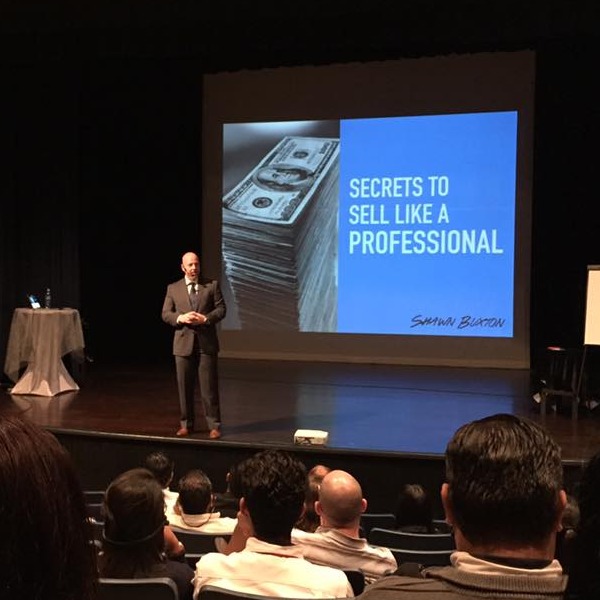
Shawn Buxton speaking on stage
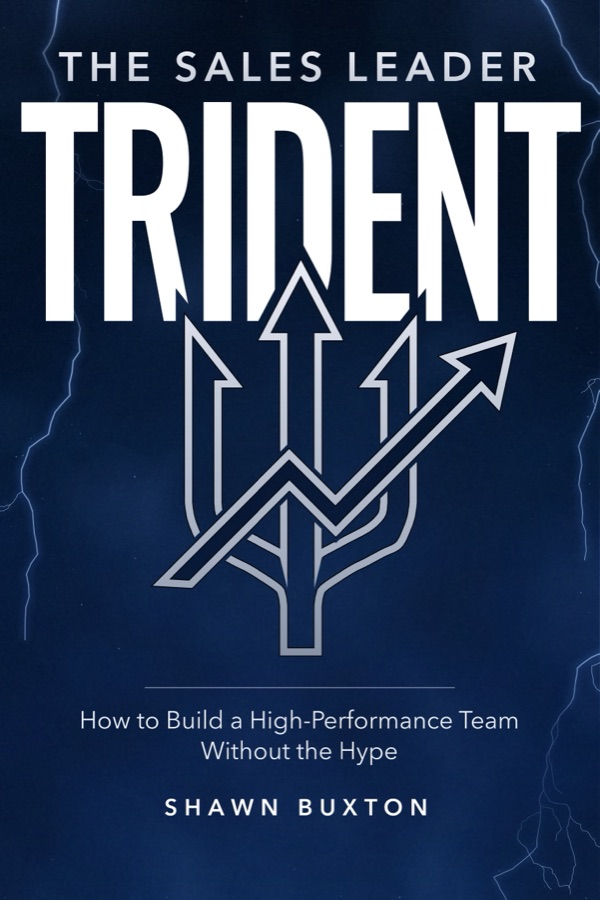
The Sales Leader Trident book cover Coming Soon

About

Shawn Buxton

I've spent 25 years in sales leadership, and most of it watching good people get handed a team with no instructions.

I carried a bag, ran teams, and led leaders inside Fortune 100 organizations before I started coaching full time. I built the Sales Leader Trident out of what actually worked, then delivered it to more than 500 sales managers across industries that have nothing in common with each other: manufacturing, construction, insurance, software, pest control, renewable energy, catering, financial advice. The frameworks hold because the job is the same everywhere. People are people, and a seller who isn't performing is either missing the ability or missing the will, no matter what the product is.

What I'm not is a motivational speaker. Inspiration wears off by Thursday. My job is to put a system in your frontline sales manager's hands and then hold them to using it, which is the part most coaching skips.

I work with CEOs, founders, and VPs of sales who need their frontline sales managers to lead, not just manage, and with owners who are still leading the sales team themselves. Some of the managers I coach have run teams for a decade. Some got the job six weeks ago. The companies that get the most out of it are the ones willing to hear that the problem is upstream of their people.

Results

What clients say afterward.

“

Shawn's coaching gave me the confidence to execute on tough decisions that were critical to building my team. From hiring right, coaching to potential and building a self motivated team, we have flourished. We went from 99% in 2019 to 178% in 2020 and Number 1 in our segment for North America.

Jon OnchiSenior Sales Manager
“

As a CEO and Founder I needed to get hands on with my struggling sales team. Shawn showed me key areas I was missing and gave me the tools to get to 108% of our number within just one month of coaching and 132% in month 2. A 40% increase overall. Shawn's coaching and insight was a game changer for us.

Rene RabelinkFounder & CEO
“

Shawn has a methodical, three step approach that's foundational. Any CEO who wants to build a world class go to market team should be thinking about how to help their managers build a culture of accountability, coach and develop the team, and remove obstacles for performance. If sales is important to you, Shawn is your answer.

Tom RogersSales Manager
“

I met Shawn when I was a Senior Team Lead. Having been in the role a couple of years, I thought there wasn't much new I would take back to my team. Boy was I wrong. He changed the way I interacted with the team, taught me how to host impactful one on ones, and intentionally build a team culture.

Ariana RubioSales Manager
“

I've used the principles of the Trident for a number of years, and the impact Shawn has made on me, my team, and the company's sales leadership team is incredible. He knows how to challenge people to get the best out of them, and does it from a posture of wanting the best for them.

Jesse DeMundVice President of Sales
“

My team was doing well, but the Trident showed me how much potential we had not unlocked. I lead differently now. I understand the difference between leading and managing, I know what motivates each person on my team, and our check-ins are more meaningful because of it. A simple, thoughtful, human way to lead a sales team.

Sara CaruanaSales Manager

Start here

Would it make sense to talk about your specific challenges?

One conversation, no pitch. Bring the situation you've been chewing on and we'll work out whether I'm the right answer for it. If I'm not, I'll say so and point you somewhere better.